1. Narrow the list before you buy samples
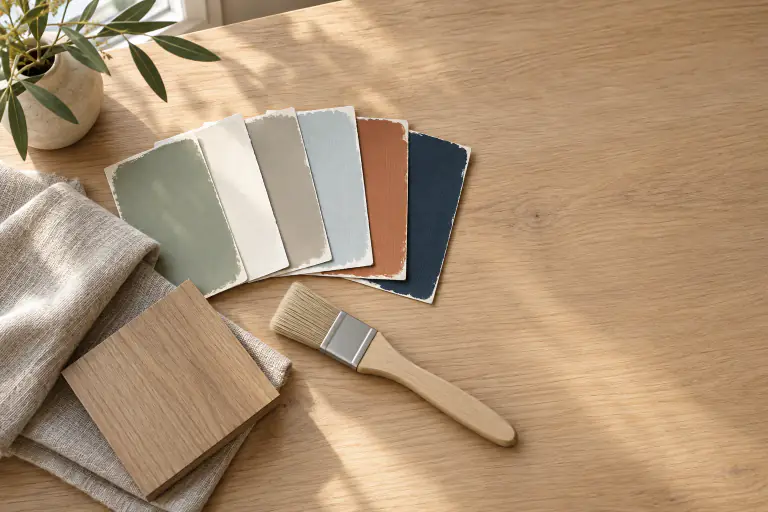
Sample pots and peel-and-stick sheets add up, and a wall covered in eight patches is hard to read. Rule out the colors that clearly fight your floor or sofa before you spend anything.
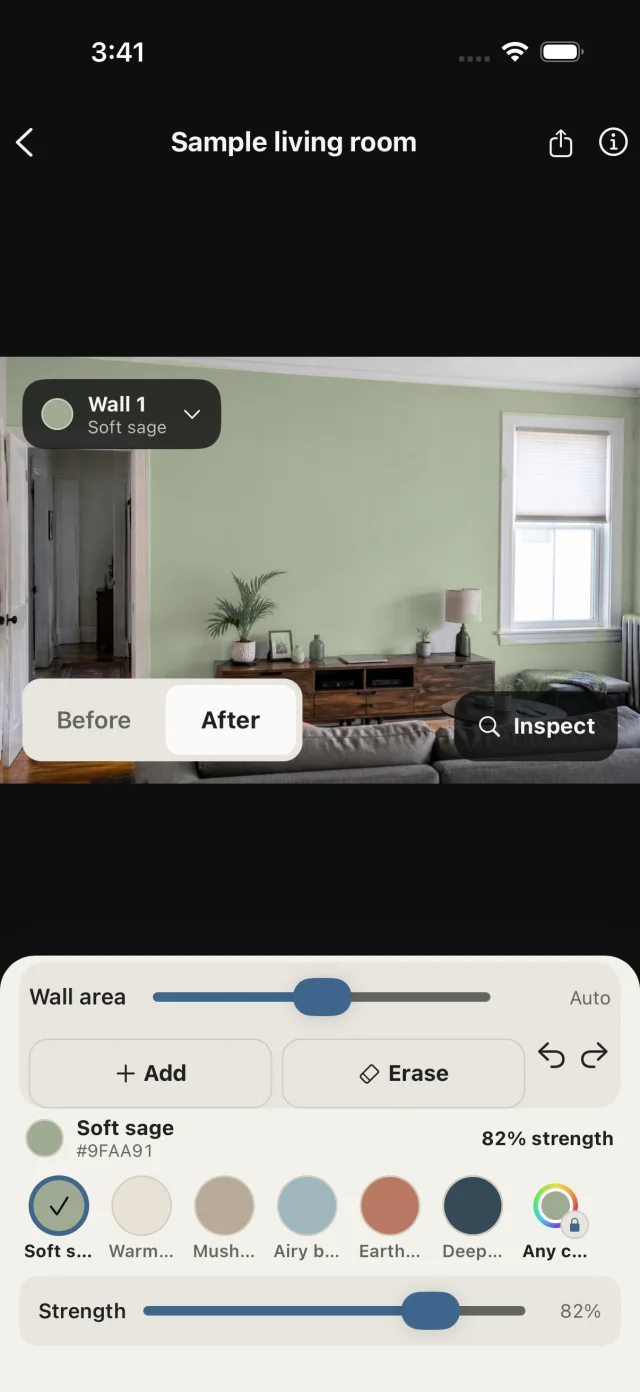
A photo preview is the cheapest way to do that. In PaintTry, try each candidate on a photo of the room, save the ones that survive, and take those two or three to the shop.
2. Choose painted boards or peel-and-stick paint samples
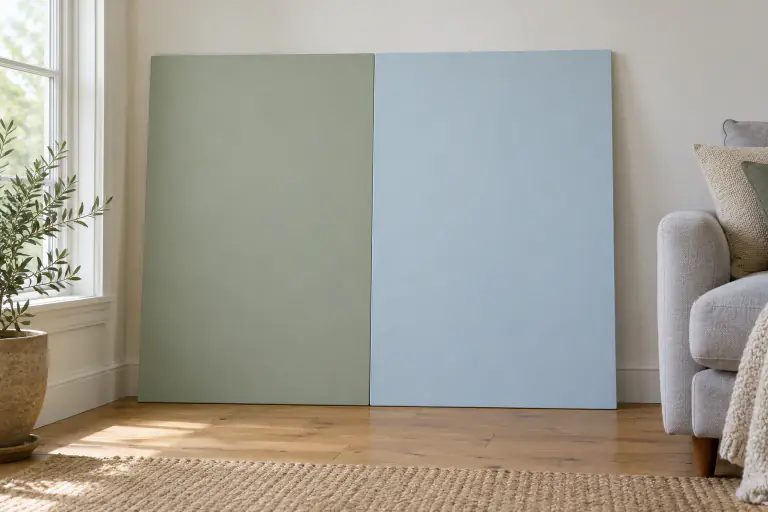
Painted sample boards. Buy a sample pot and paint two coats onto white poster board or foam board. You get the real paint in a size you choose, and you can move the board from wall to wall. It takes an afternoon including drying time.
Peel-and-stick paint samples. These are sheets coated with real paint that you stick to the wall and peel off without residue. They are quick and tidy, and you can reposition them, but the range is limited to the colors the sample company stocks, and the sheen may not match the finish you plan to buy.
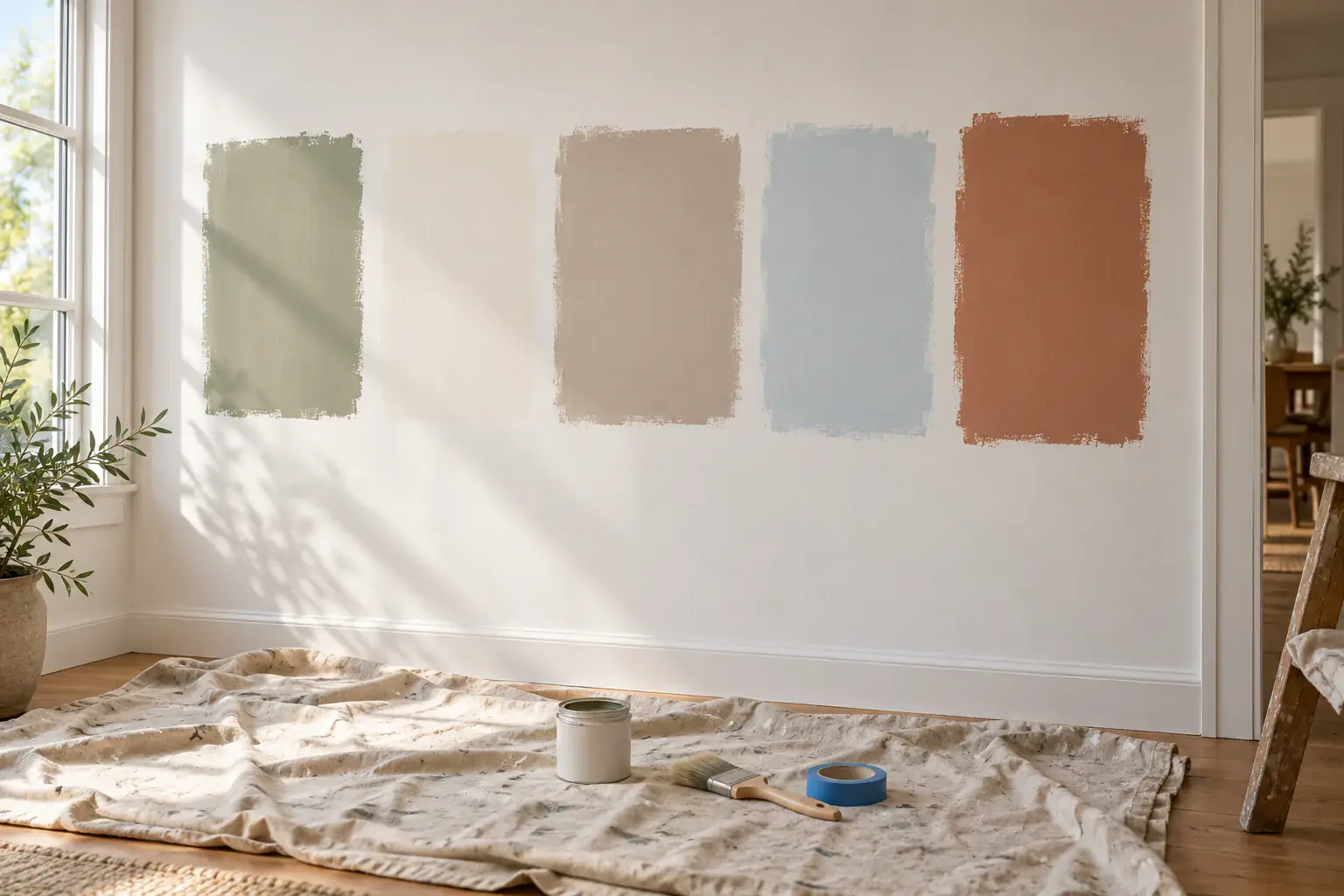
Painting straight on the wall. This is the old method, and the least reliable. The existing color around the patch skews how you see it, and thick patches can show through the final coats as a ridge. If you do it, prime a white square first.
3. Make paint samples big enough to judge
Bigger is better. Aim for about two feet square for a wall color. A small chip shows you the hue, but color looks lighter and brighter across a whole wall than it does in a little square, and a large sample gets you closer to that effect.
4. Put samples where the paint will go
Place samples on the wall you are actually painting, at eye level. Put one near the window and one in the darkest corner, because the same color can look like two different paints in those spots. Keep a few inches of space between samples.
Hold a sample next to the trim, the floor and the largest piece of furniture too. Most disappointments come from a color that looked fine alone and clashed with something already in the room.
5. Check samples morning, afternoon and night
Leave the samples up for two or three days. Look at them in the morning, in the afternoon, after dark with your lamps on, and on a cloudy day if you get one. Walk past them on the way to something else; a casual glance is often more honest than staring.
How many paint samples should you get?
Two to four. One sample gives you nothing to compare against, and more than four blur together. If none of them works, go back to photo previews and try new directions there before buying another round of samples.
Common questions
Can I test paint directly on the wall?
You can, but sample boards are more reliable. A patch painted on the old color is influenced by the color around it, and thick patches can show through the final coats. If you paint on the wall, prime a white square first and sand the edges smooth before repainting.
Are peel-and-stick paint samples accurate?
They are made with real paint, so the color is close to what comes out of the can. The sheen may differ from the finish you buy, which changes how the color reads slightly. Move them around the room the same way you would a painted board.