Start with the floor and the sofa
After the walls, the floor and the sofa are the largest surfaces in a living room, and they are expensive to change. Note their undertones before you look at a single paint chip. Oak and cherry floors lean orange or red, older pine leans yellow, and many modern laminates and gray sofas lean cool.
A wall color that shares or gently balances those undertones looks settled. One that fights them makes the furniture look tired, even when the paint is lovely on its own.
Wall colors for brown furniture and wood floors
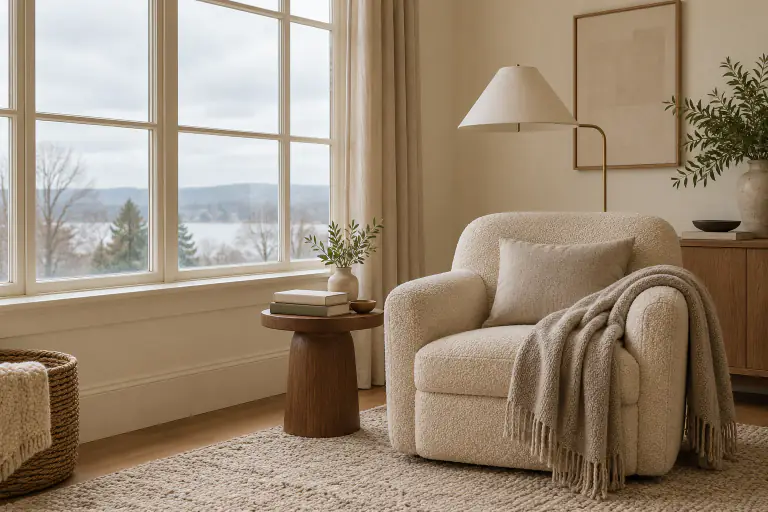
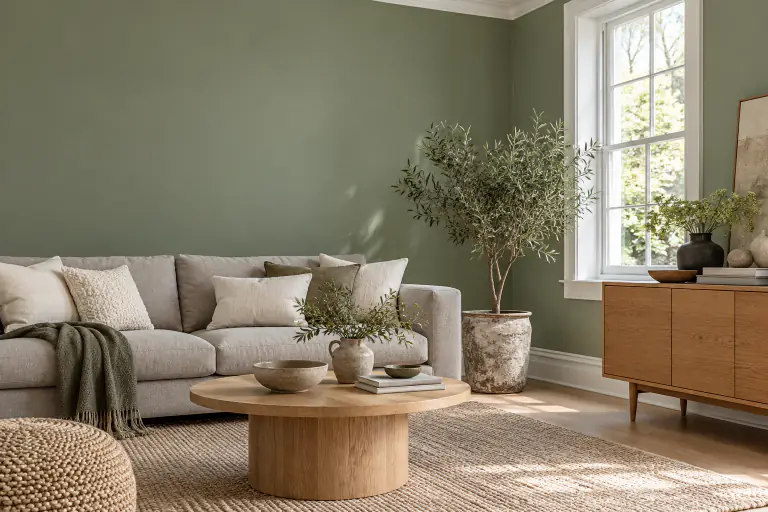
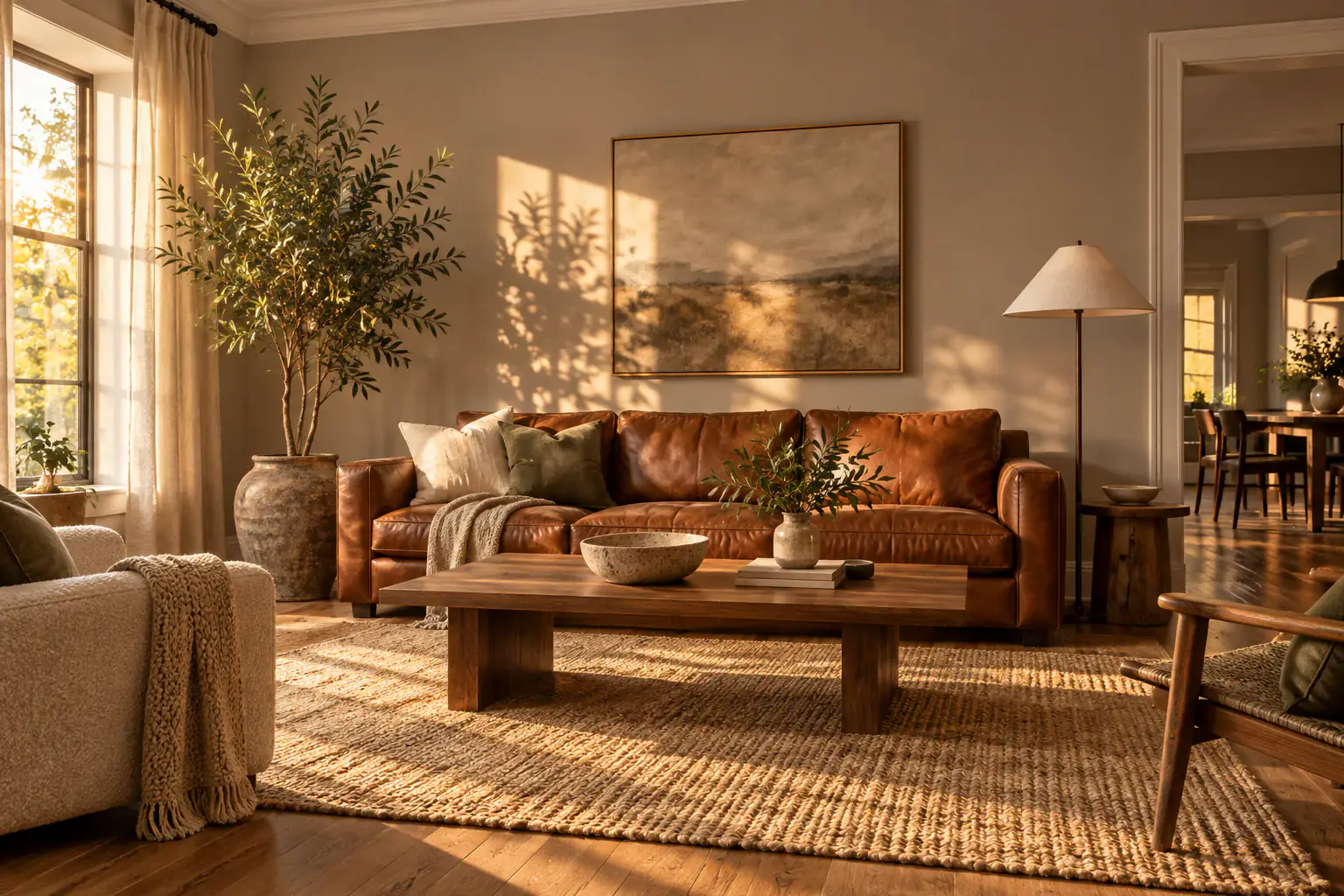
Brown leather, walnut and warm oak sit comfortably with warm neutrals such as cream, mushroom and greige. Muted greens like sage and olive work well too, since green and wood are a natural pairing, and dusty blue gives a cooler contrast that still feels warm.
Be careful with stark, blue-leaning whites, which can make orange-toned wood look more orange. A beige that is almost the same color as the floor has the opposite problem: everything blends into one tone.
Paint colors that go with a gray couch
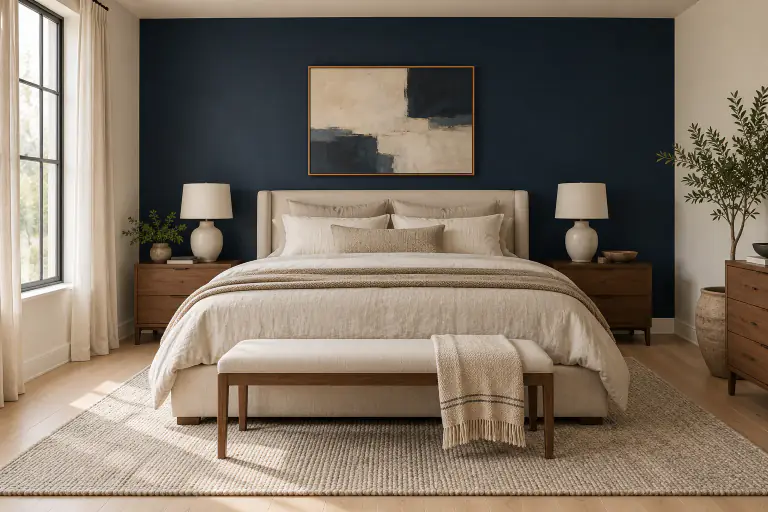
Check which way the gray leans. A cool gray sofa with a blue cast looks good with crisp whites, airy blues and a navy accent. A warm gray or greige sofa suits mushroom, warm white and sage.
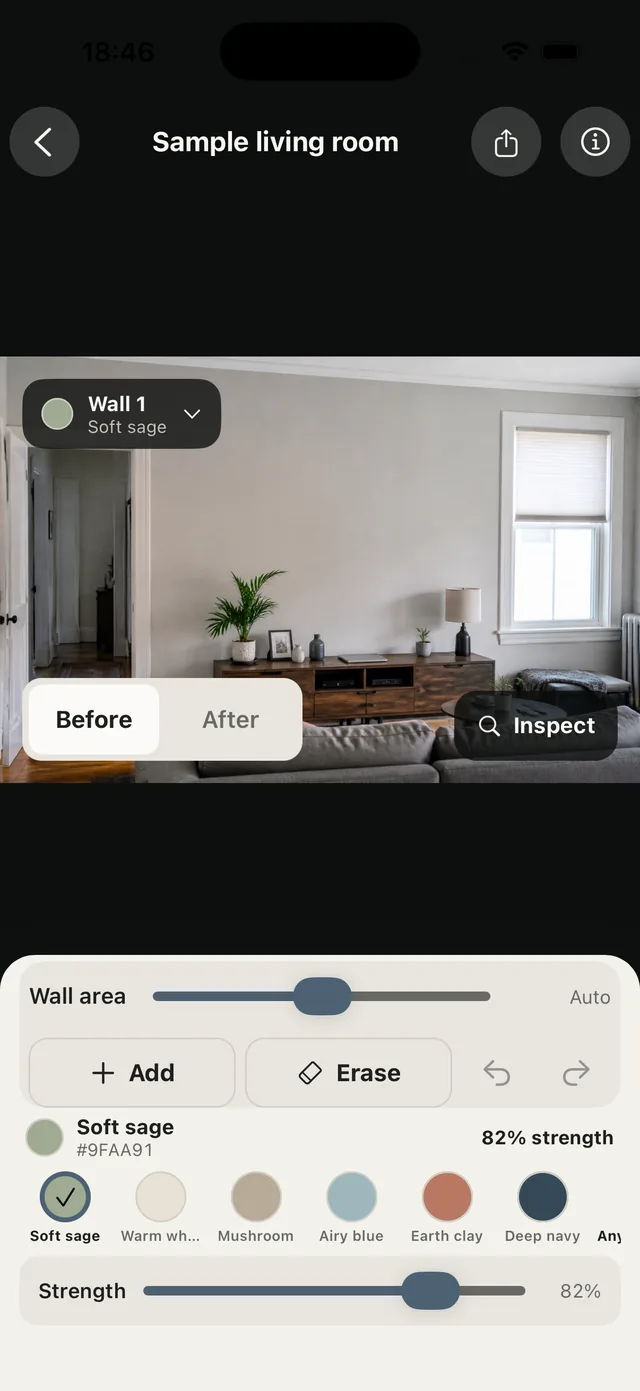
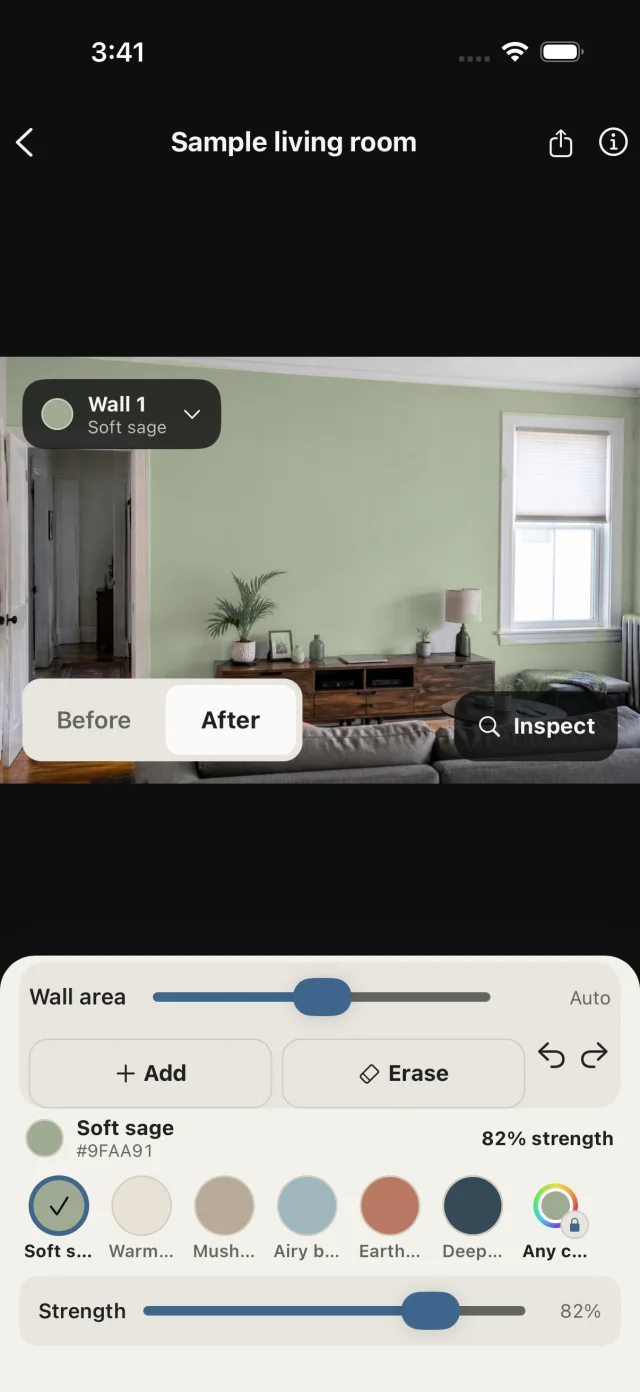
Gray and sage is an easy combination to picture: the sample room in PaintTry is a gray sofa against a sage wall.
Account for the light and the size of the room
A south-facing living room gets warm, strong light and can handle cooler colors. A north-facing one needs warmer colors to avoid looking gray; our guide to north-facing room paint colors goes into this.
In a small or dark living room, the lightest white won’t make it bright; with little light to reflect, white looks gray. A confident mid-tone often looks better because it seems intentional.
If the living room is open to the kitchen
In an open floor plan, choose one main color for the connected walls and change color only where there is a natural break: an inside corner, a doorway or a change in ceiling height. An accent wall can define the living area without breaking up the space; see how to choose an accent wall.
Try your shortlist in a photo of the room
Take a photo of the living room from the doorway, so the floor, the sofa and the wall are all in it. Open it in PaintTry, select the wall and try your shortlist: Warm white and Mushroom for a quiet room, Soft sage or Airy blue for a little color, Deep navy for one wall. Save the strongest versions and compare them before you buy samples.
Common questions
Should living room walls and trim be the same color?
They can be. Painting trim the same color as the walls, usually in a glossier sheen, gives a quieter, more modern look. Contrasting white trim gives more definition and is the traditional choice. Preview both before you decide.
What paint finish is best for living room walls?
Matte or eggshell for most living rooms. Matte hides wall imperfections best, while eggshell is easier to wipe clean. Save satin and semi-gloss for trim and doors.