Why paint looks different in a north-facing room
In the Northern Hemisphere, the sun never shines directly through a north window. The room is lit by skylight, which is bluer than direct sun, and the light stays fairly even through the day. That steady cool light takes the warmth out of colors and adds a gray cast. In the Southern Hemisphere, south-facing rooms behave the same way.
The upside is consistency. A color that works in a north-facing room at 10am will look much the same at 3pm, which is not true of a room facing west.
Paint colors that work in north light
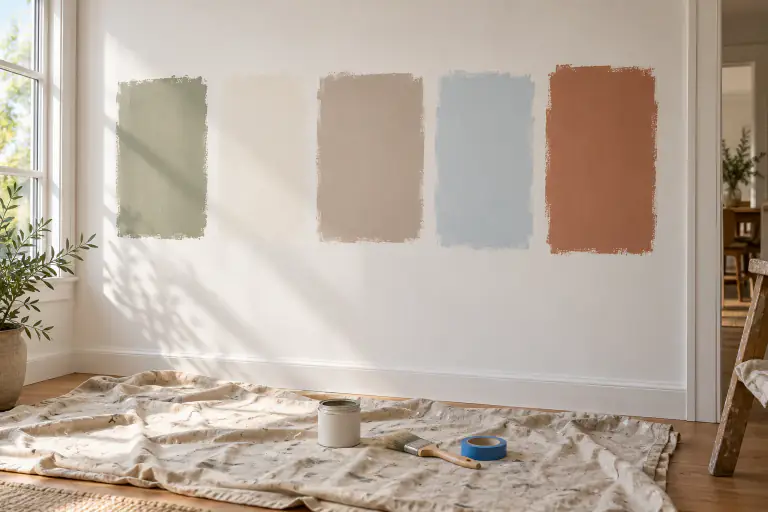
Warm whites with a slight yellow or red undertone stay white instead of going gray. Greige and mushroom keep a room feeling warm without much color. Muted greens that lean yellow, such as warm sage and olive, hold up well, and earthy clays and terracottas look softer than they do in sun.
Deep colors are worth considering too. Navy, forest green and charcoal often look richer in north light because there is no harsh sun to wash them out, and they make a dim room feel cozy.
Colors to be careful with
Cool grays with a blue undertone can look like wet concrete. Blue-leaning whites look gray, and pale icy blues can make the room feel cold. None of these are impossible, but sample them next to a warmer alternative before deciding.
If you love a cool color, push it a little warmer or a little deeper than you would in a sunny room. A blue with a touch of green in it, or a gray with some beige, holds up much better in north light.
Lighter paint won’t make a dark room bright
A color with a high light reflectance value (LRV) does bounce more of the available light around. But if there isn’t much light, the whitest white just looks gray. A warm mid-tone often looks better in a dim north room because it looks chosen. Lamps with warm bulbs, around 2700K, also help balance the cool daylight.
How other room directions change paint color
South-facing rooms get strong, warm light for most of the day; colors look lighter and warmer, and cool colors stay balanced. East-facing rooms are warm and bright in the morning and cooler later. West-facing rooms are cooler in the morning and turn golden, sometimes orange, in the late afternoon.
Test colors in your own north light
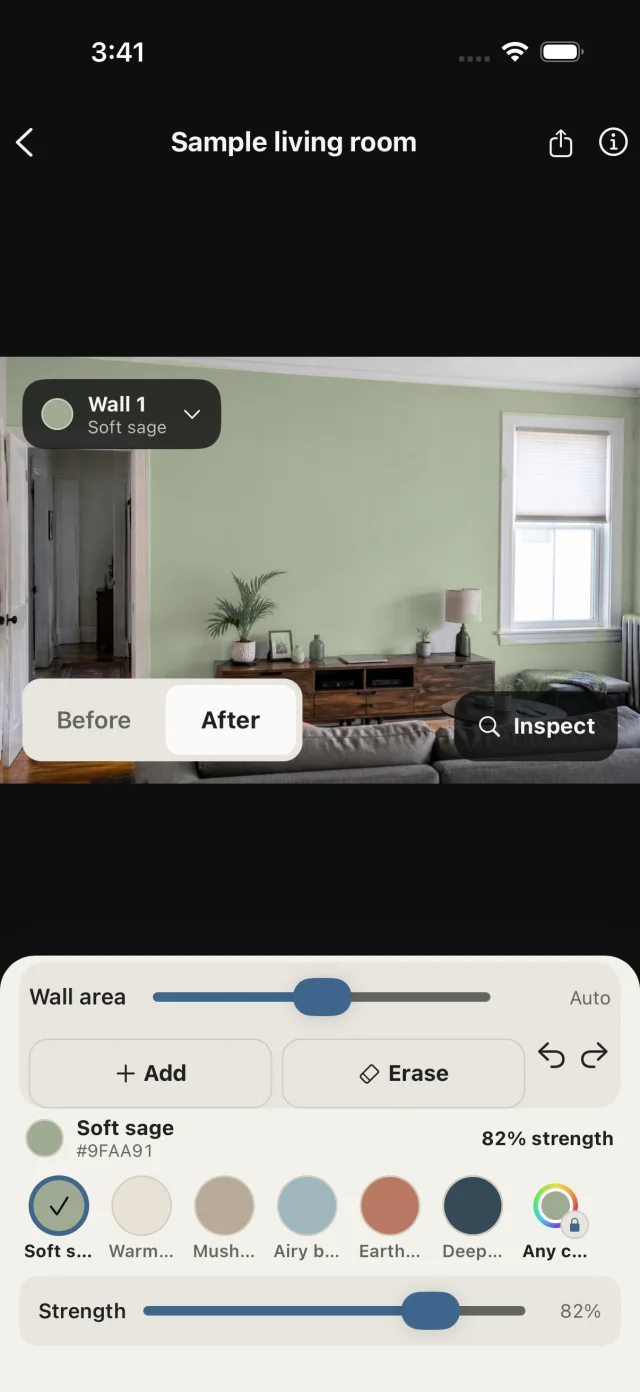
Because north light is so even, a midday photo is a good record of how the room really looks. Take one without flash, open it in PaintTry, and try Warm white, Mushroom, Soft sage or Earth clay on the wall. The preview keeps the photo’s shadows and texture, so you see the color in your room’s own light. Then sample the best two on the wall itself.
Common questions
Is gray a good color for a north-facing room?
Cool grays usually look cold and flat in north light. If you want gray, choose a warm gray or greige with a beige or brown undertone, and test it next to a cool gray to see the difference.
What white paint is best for a north-facing room?
A warm white with a slight yellow or red undertone. Pure or blue-leaning whites tend to look gray in indirect light. Compare two or three warm whites on large samples, since the differences between whites only show up side by side.